Sunday, May 22, 2016

RKC BLOG: 7 STEPS TO A BANG-FREE KETTLEBELL CLEAN

by STEVE "COACH FURY" HOLINER on MAY 11, 2016
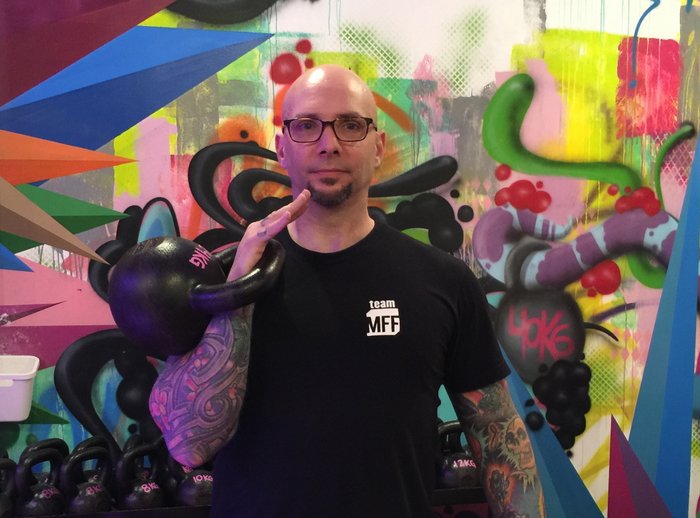
Steve Holiner Kettlebell Clean
Few movements in “kettlebell land” frustrate people like kettlebell cleans. Not everyone enjoys the bruising and soreness we often deal with while learning cleans. And, cleans can get stressful if we’re anticipating multiple slams to the arm.
In my years as an RKC Instructor, I’ve found kettlebell cleans to be one of the most challenging moves to truly own.
The common issues most people have with cleans fall well within the learning curve. Bruising, soreness, and forearm slamming stop as technique improves. Cleans should not hurt. However, you will need to invest some quality time to smooth out your clean. Patience and practice will go a long way!
Here are seven tips for achieving bang-free cleans:
1.    HINGE. People often begin to squat their cleans when they focus on getting the kettlebell up. From watching your backswing, I shouldn’t be able to tell if you’re going to do a swing, clean, or snatch. Keep the hinge consistent.
2.    GRIP. Loosen up folks! Your grip should be fairly relaxed. Think of your fingers as a hook and your thumb as a safety latch. The kettlebell handle must be able to move within your hand.
3.    ROTATE. As soon as your kettlebell is at the end of the backswing, begin to externally rotate your arm toward the rack position. Think “THUMB TO BUM” in the backswing—then, what my buddy Geoff Hemmingway calls “OLD TIMEY MAYOR” in the rack position. The kettlebell will actually make contact with the forearm during the float. This allows the kettlebell and arm to meet the torso at the same time. This tip will eliminate the big bang that can happen when the kettlebell lands last.
4.    VOLUME CONTROL. With practice you will learn to exert the right amount of force from the hamstrings, glutes, and hips to ease the kettlebell into the rack position. If the kettlebell is coming in too fast, and you can’t slow it down to prevent banging, then lower the volume. On the flip side, if you are using your biceps to curl the kettlebell into the rack, then you’ll need to turn the volume up. The kettlebell must float during the clean!
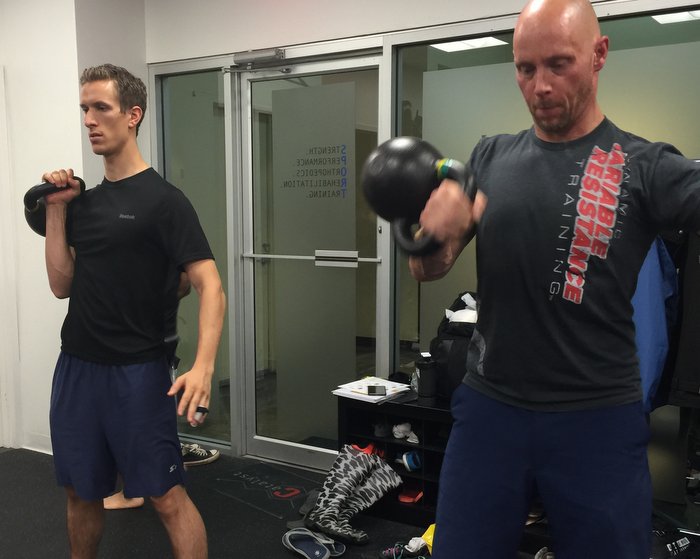
RKC Kettlebell Cleans
5.    LOW AND CLOSE. The path of the kettlebell should be low and close to you during the clean. If the kettlebell goes too high, it will arc down and slam into you. If the kettlebell goes too far away from you, it will whip into you. Keep your elbow close to your ribs. While some say to pin the elbow to your ribs, I’m not a huge fan of that cue, because when the focus shifts to the elbow, the arm will often get tense. Excess tension in the arm often leads to banging, curling, and eventual elbow discomfort.
6.    NEUTRAL WRIST. Keep your wrist neutral for a smooth bang-free clean. Own that rack position!
7.    REVERSE. Don’t over-think the eccentric part of the clean. Keep the kettlebell close, keep the grip relaxed, and rotate “thumb to bum” as the kettlebell goes into your hinge. Keep your shoulder in the socket as you spill the kettlebell into the backswing.
These seven tips will have a big impact toward removing the impacts on your arm! But, don’t try them all at once, or your brain will smoke. I suggest trying one drill at a time. You’ll have bang-free cleans in no time!
Let me know how these work for you.
Thanks for your time!
-Fury
***
Steve “Coach Fury” Holiner’s superhero headquarters is Mark Fisher Fitness in NYC. Fury’s a Master RKC, a DVRT Master Chief, and an Original Strength Instructor. He is available for classes, semi-privates, instructor training and programming at MFF. Check out coachfury.comfacebook.com/coachfury Instagram@iamcoachfury and Twitter @coachfury for more info.

DVRT BLOG: IT IS ALL IN THE FEET

By Steve “Coach Fury” Holiner
Master DVRT, Master RKC, MFF Coach, OS Lead Instructor
Honestly, this may be the most boring and/or beneficial article you read regarding DVRT Ultimate Sandbag rotational training. It’s about your FEET! Read on if you dare (or have a foot fetish). 
DVRT Ultimate Sandbag Training is a system with an intelligent and progressive series of movements and exercises that cover all planes of motion. For many of us, the rotational training component of DVRT is the sexy stuff that gets us in the door. Another draw to DVRT for me was the contrast between relatively basic movements like the Bear Hug Squat against more complex movements like the Rotational Clean Press. The mix of simplicity and complexity sings to my personality. I’m a simple man constantly driven toward progression. 
 Screen Shot 2016-05-10 at 7.55.17 AM.png
I am not naturally gifted in the coordination department. It takes me hard hours of practice to obtain some base proficiency in a skill. One of the lessons I learned as a skateboarder, was that I needed to own the basics before I could step up to more difficult tricks. You need to get solid at ollies before you can bust kickflips. In my martial arts practice, you shadow box or perform katas slowly to master the movements before it’s time to add speed. These approaches are even more relevant in regards to strength training and Ultimate Sandbag use. Unfortunately, it can be all too easy to skip the essentials with DVRT Ultimate Sandbag Training. When we miss a crucial step to try something that looks sexier, we risk losing the true benefit of the exercise itself. 
This brings me to the heart of this article. Here is one of the BIGGEST things I see done incorrectly when people are doing DVRT rotational exercises:
THE FEET ARE WRONG!
Boring huh? It’s true though.
There are two key points in the setup of all DVRT rotational movements. 
  1. We are looking for INTERNAL ROTATION in the hip as we move. 
  2. We are creating force from the GROUND UP. 
LR-5901.jpg
Folks, our feet sell us out if we are doing this wrong. It is easy to set up correctly when we are performing a relatively simple movement like a rotational deadlift, but it all goes to hell when we jump straight into rotational clean and presses. Remember my skateboard analogy. We need to own the ollie to own the kickflip. 
 INTERNAL ROTATION:  I’ll walk you through the proper foot setup for a rotation deadlift. My feet are hip width apart, with the USB parallel to my right foot. I am internally rotating my left leg at the hip and pivoting on the ball of my left foot. As I lift the USB and pivot to the center, I now have my feet facing forward and I am in a traditional USB deadlift position. We then begin to pivot and hinge to the other side. The USB will land parallel to my left foot and now my right leg will be internally rotated and on the ball of the right foot. 
 What most people end up doing is simply turning their entire body so they have actually just turned direction and not rotated. 
 GROUND UP.  All to often the pivoting leg isn’t utilized during rotational movements. A person’s focus becomes the lead leg. What we’re really looking for is to drive through the pivoting foot. For those martial artists out there, imagine throwing a right cross without using your right foot. Not only would the force of the punch be greatly diminished, you would be off balance. Unfortunately, the weight of the USB can help maintain balance and we become focused on the wrong goal. Drive through the foot as you pivot!
That’s simple yet vitally important advice to boost your rotational training. Check your feet!
Let me know how it goes. 
Thanks for your time. 
Die Mighty!
-Fury

Steve “Coach Fury” Holiner’s superhero headquarters is Mark Fisher Fitness in NYC. Fury’s also a Master DVRT, Master RKC and an Original Strength Lead Instructor. He is available for classes, semi-privates, instructor training and programming at MFF. Fury also does online training and is available to teach workshops. 
Visit coachfury.comfacebook.com/coachfury Instagram@iamcoachfury and Twitter @coachfury for more info.

MFF BLOG: THE IMPORTANCE OF BEING AWKWARD


By Steve "Coach Fury" Holiner, MFF Kaiju Hoarder, Master RKC, OS Lead Instructor and Master DVRT

If you’re awkward and you know it clap your hands!

There are many definitions of the word awkward. Here are three that resonate with me:

awkward (from Merriam-Webster) 
  1. lacking ease or grace (as of movement or expression)
  2. lacking social grace and assurance <an awkward newcomer>
  3. causing embarrassment <an awkward moment>
For as long as I can remember, I have felt awkward. While I always had friends and an evolving sense of self, I never felt like I fit in the way I perceived others did. I never cared about being popular, but I always felt like I lacked the social skill set that allowed others to become popular. How do people know the right things to say and do?

Have you ever wondered to yourself what the hell is wrong with me? Well I have.

Often.

Very often.

Very, very often.

I know that I’ve missed out on things as a kid, as a young adult and as a grown-ass man because I was AFRAID of being embarrassed by saying/doing the wrong things.

Looking back, I missed out on things in life because of a self-fulfilling fear that I wasn’t going to live up to some imaginary social standard. Well F that! There is nothing wrong with being awkward. In fact, I now think of being awkward as a lifestyle. I embrace and fight against it in equal measure. My take on awkwardness is a two-phase war.

Phase 1: Screw fitting in.

Be yourself. Be unique. Be awkward! While it may be a tougher mountain to climb, you will find people who love you for who you are and not the person you believe they want you to be. Too few understand (fewer share) my love for Godzilla movies, but those that do, totally get it and me. That’s a genuine connection.

Phase 2: Fight through awkward situations.

I’ve started to challenge feeling awkward as if I were training in martial arts. I purposefully started creating and placing myself in awkward situations to see how I would react. This is my form of awkward sparring practice. I relish awkward pauses, overambitious clapping and bad jokes that bomb hard.

The Ninjas at MFF have been part of my awkward theory experiments as well. I’ve programmed things like awkward dance parties (ADP son!), Star Wars-themed crawl games and African Anteater Ritual Burpees into classes.

Why do I explore this sense of awkwardness?

If you practice being comfortable in awkward situations, something special happens.

You become socially fearless.

When you become socially fearless… you are free!

Free to be serious. Free to be ridiculous. Free to be yourself.

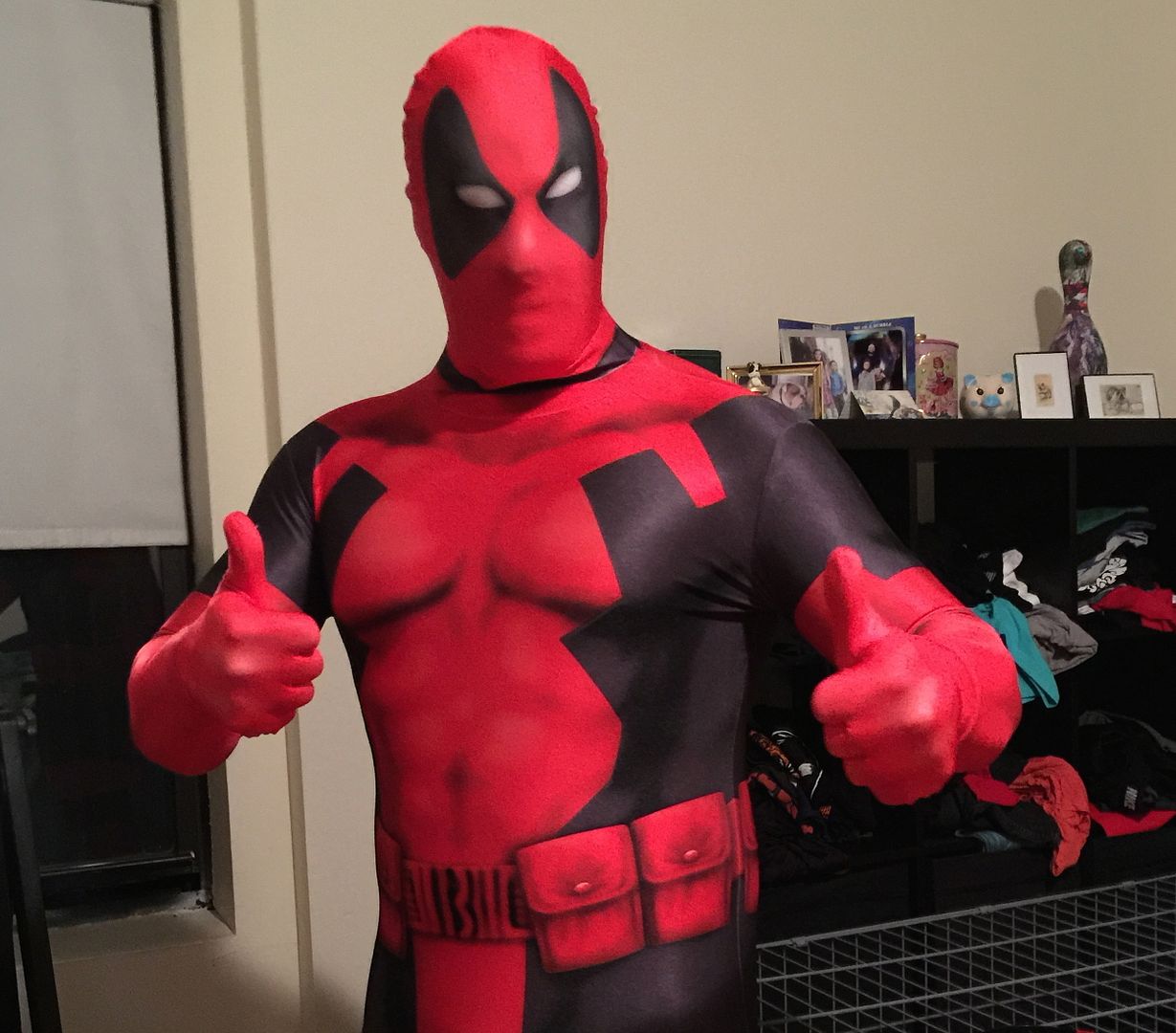
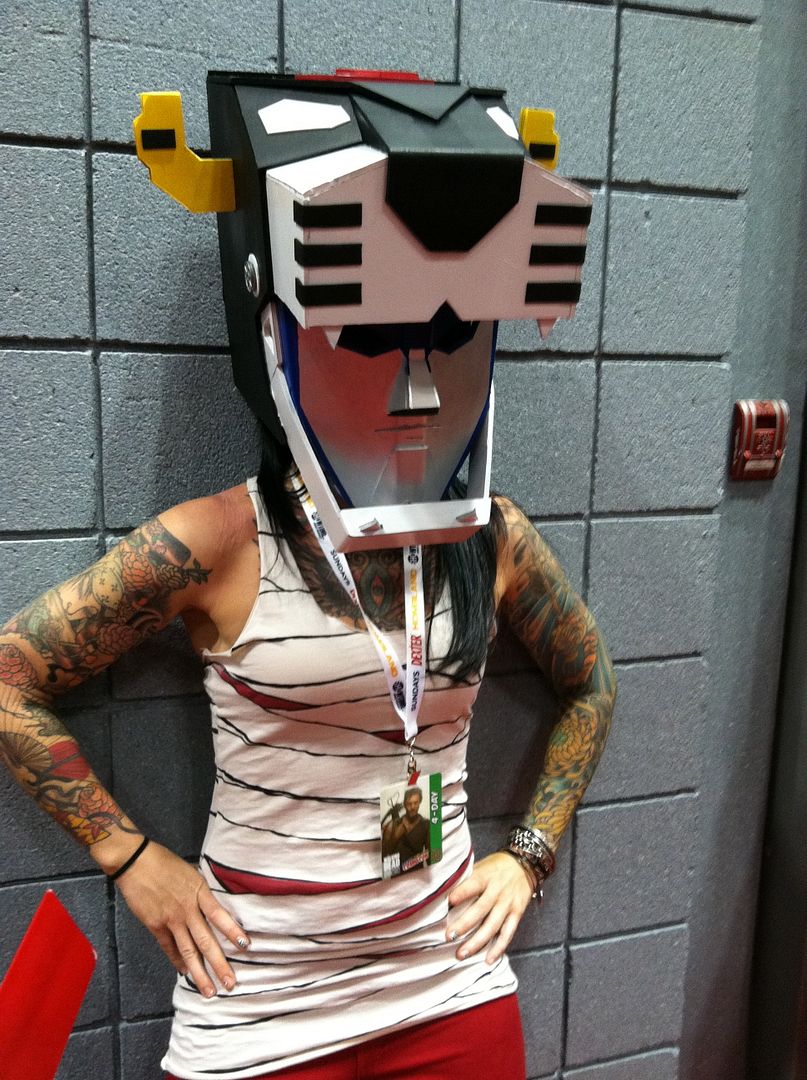
Mark Fisher Fitness is the PERFECT example of finding a place where awkward breeds awesomeness. Whether it’s teaching a class in a Mad Max Warboy costume, or leading an RKC certification in another state with people I haven’t met, I am able to fully be myself because I am not scared of being awkward. As that fear wanes, your confidence grows. It is liberating, my friends. You know what else? People will dig you for being balls out. You may not connect with everyone, but that’s an impossible goal anyway. Find the people who relate to what you have to offer and hang on tight to them. Awkward folks will fight valiantly side by side.
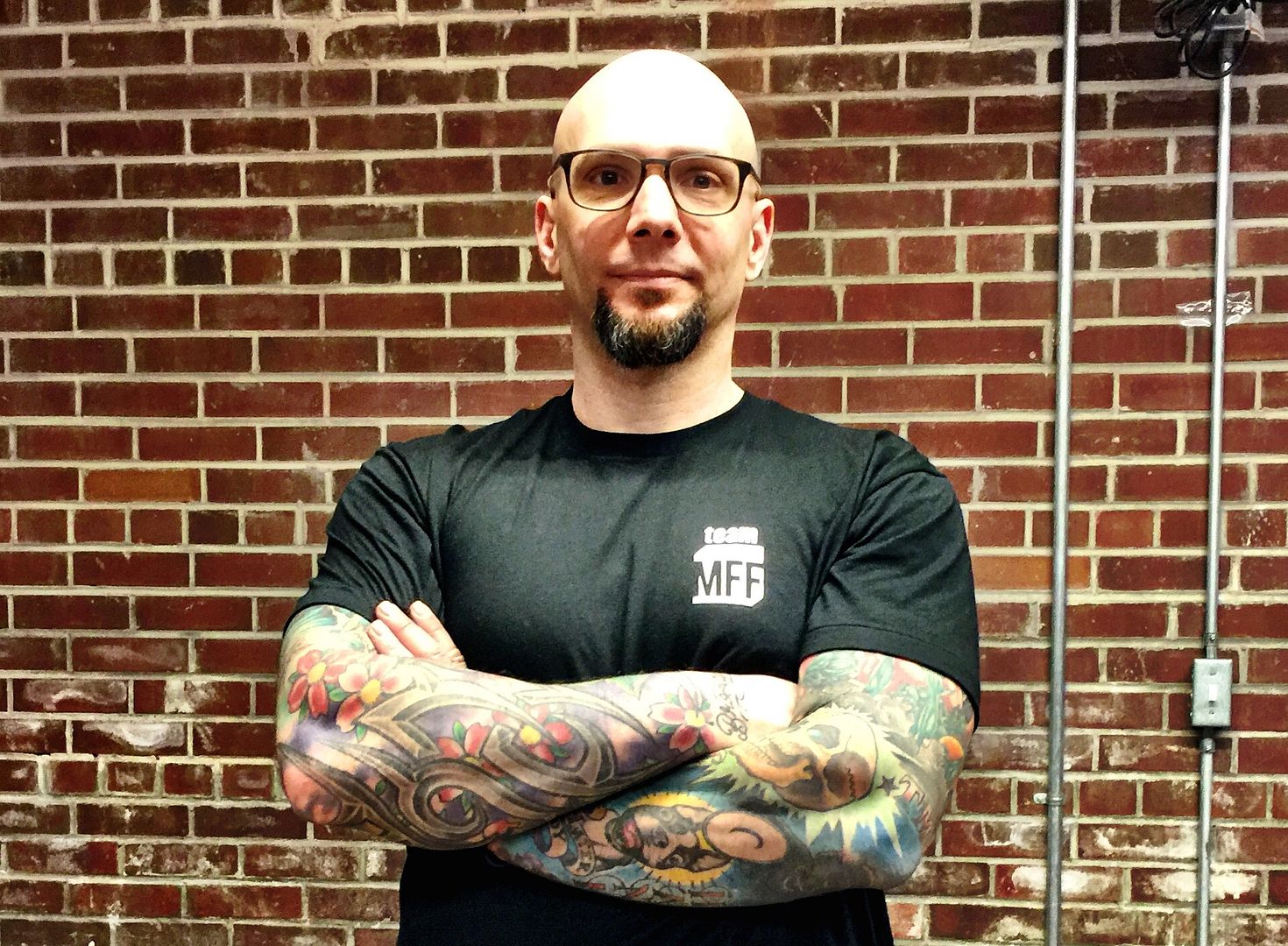
Here are some action steps to help you embrace your awkwardness.

  1. The next time you find yourself in an uncomfortable silence at a party, live in it. Feel no pressure to say or do anything. See what happens.
  2. Wanted to wear a costume to MFF but have been too afraid? Do it!
  3. Say hi to someone you haven’t officially met, but see often, at the gym or work. Better yet, have coffee with them.
Keep me posted on your progress.

-Fury
Steve “Coach Fury” Holiner’s superhero headquarters is Mark Fisher Fitness in NYC. Fury’s also a Master RKC, and Original Strength Lead Instructor and a Master DVRT. He is available for classes, semi-privates, instructor training and programming at MFF.  Check out coachfury.comfacebook.com/coachfuryInstagram@iamcoachfury and Twitter @coachfury for more info.